Why Is Delta 9 Legal?
As the cannabis industry evolves, a common question arises: Why is Delta 9 legal? To understand the legal status of Delta 9 THC, the main psychoactive compound in cannabis, it’s essential to explore the differences between federal and state laws, the impact of the 2018 Farm Bill, and the distinctions between hemp-derived and marijuana-derived THC products.
The 2018 Farm Bill played a pivotal role in the legality of Delta 9 THC. This legislation legalized hemp and its derivatives at the federal level, defining hemp as cannabis containing no more than 0.3% THC by dry weight, a limit that specifically applies to Delta 9 THC. This opened the door for the legal production, sale, and consumption of hemp-derived products, as long as they stay within the 0.3% threshold. Anything above this level is classified as marijuana, which remains illegal under federal law, though individual states have their own regulations.
This legal framework is significant because it allows Delta 9 THC to be extracted from hemp and sold in various forms, such as edibles, tinctures, and oils, as long as the THC content does not exceed the legal limit.
The legal status of Delta 9 hinges on whether it is derived from hemp or marijuana. While both hemp and marijuana are varieties of the cannabis plant, the difference lies in their THC content. Hemp contains low levels of Delta 9 THC, which, as noted earlier, must remain below 0.3% by dry weight to be considered legal. Marijuana, on the other hand, often contains much higher concentrations of Delta 9 THC, making it illegal under federal law unless state regulations permit its use.
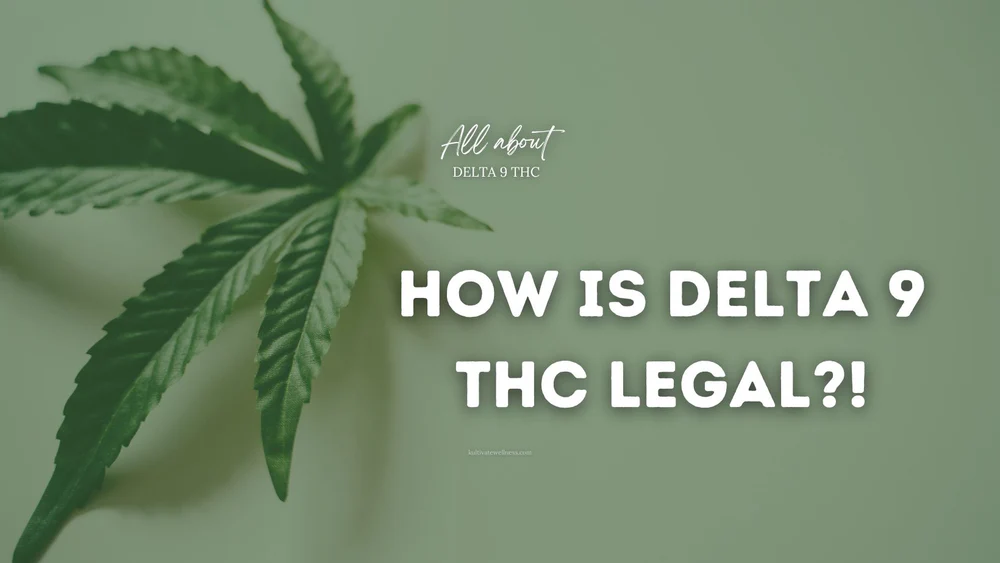
Hemp-derived Delta 9 products are considered legal as long as they comply with the federal THC limit. This has resulted in a growing market for Delta 9 edibles and gummies, allowing consumers to experience the benefits of THC without violating federal guidelines.
Although Delta 9 THC is federally legal when sourced from hemp, states have the power to regulate it as they see fit. Some states, like California and Colorado, have fully legalized both recreational and medicinal cannabis use, including marijuana-derived Delta 9, which can be sold at higher concentrations. In contrast, states like Texas adhere strictly to federal law, only allowing hemp-derived products with less than 0.3% THC.
Consumers must be aware of their state’s regulations to avoid legal complications when buying Delta 9 products. The federal legality of Delta 9 THC is based on its origin and concentration. If the THC is derived from hemp and remains under the 0.3% threshold, it is not classified as a controlled substance. This legal distinction allows companies to produce and sell Delta 9 gummies and other products across the country. The 2018 Farm Bill further supported this, promoting research into hemp-based compounds like Delta 9, which has contributed to the growing popularity of these products.
As more states move toward cannabis legalization, Delta 9 THC’s legal status may shift. Advocacy groups are pushing for expanded legalization, and public opinion is increasingly in favor of both medicinal and recreational cannabis use. However, federal law still draws a firm line, particularly around marijuana-derived Delta 9 THC.
For now, Delta 9 THC’s legality depends on its source and concentration. Hemp-derived Delta 9, within the 0.3% THC limit, remains legal under federal law, offering a lawful way for consumers to enjoy the benefits of THC. The 2018 Farm Bill laid the foundation for this legal status, and while the future of Delta 9 legislation remains uncertain, its legality is currently determined by how and from what it is produced.